

Family Estrangement is Not an "Epidemic," Child Abuse Is.
How the Cultural Messaging Around "No Contact" Empowers Abusers

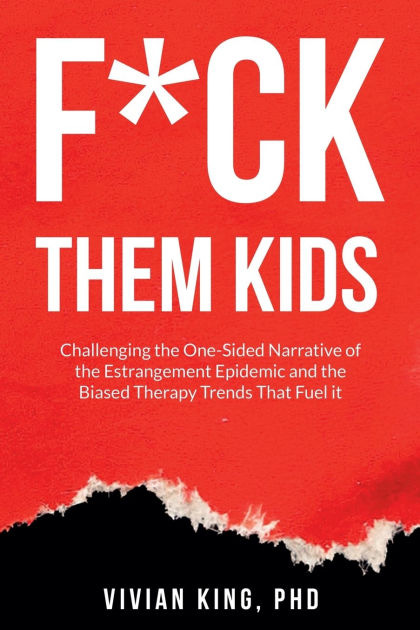
There is a major cultural backlash against adults who are estranged from their parents.
As someone who made the difficult decision to go no-contact with my family within the past several years, I have noticed an uprising of angry parents comforting themselves by labelling familial estrangement as a “social contagion”.
If we don’t receive the guilting and shaming from people in our midst who sympathize with our abusers, we will surely find it in media.
TV shows like Oprah have capitalized off the stories of estranged adult children—claiming to listen to “both sides” all while harping on the “good old days”, where we simply brushed our problems off at dinner…no matter what said “problems” were.
But from my perspective, the backlash against estranged adult children is inextricably linked to the status of children in our society.
After all, before you estrange from your family—you first had to experience how they treated you as a child.
Children are an incredibly vulnerable class. They don’t have the same rights as adults, and they’re completely dependent on the goodwill of the adults in their midst for their care.
Throughout U.S. and European history, children were legally recognized as chattel, along with slaves and other property. More specifically,—children were the property of their fathers, just like women.
Although modern laws have provided more legal protections and “personhood” for children, it all boils down to the same thing: kids are always at the behest of any adult who can legally claim them.
Now let’s just pause and reflect for a moment. Have you noticed that mental illness, abuse, and emotional immaturity is rampant in our society? It’s almost as if you have to swim upstream to achieve holistic health.
For this reason, I estimate that most children are growing up in dysfunctional environments. Not necessarily extreme conditions—but more children than we admit are living on the higher end of the spectrum of damage and dysfunction, even if it isn’t obvious in public.
And, the events that a person experiences during the most vulnerable and formative era of their life—lays the foundation for everything that happens in adulthood, including estrangement.
Many people choose to accept and live with familial abuse, even when it ruins their life. However, if someone truly wishes to heal from harmful patterns that originated within their family, they will have to confront those patterns and leave them behind.
The thing is, when an adult child chooses to confront the dysfunction that originated within their familial relationships, there is no guarantee that this will include healing and restoration of the existing family unit.
Because unfortunately, there are some damages that are too deep to be restored.
When you total a car, you can’t just take the broken pieces to a mechanic and ask them to bend the car back into place.
When you burn down a house, you can’t construct a new one using the ashes.
Sometimes, when an adult child recognizes a sliver of a chance at healing—they simply try to repair, or build a new house with new tools, and new materials.
But that takes investment; one that some people don’t have, or are not willing to give.
Thus, they are often met with resistance and denial:
“That never happened; You’re too sensitive; I don’t remember that!”
“I’m a wonderful parent; I’ve done nothing wrong; Accept my flaws!”
There is no foundation of accountability upon which the relationship can be healed, and so, the adult child is left with the option of either embracing these familial relationships that continue to harm them, or setting boundaries so that they can finally have a chance at finding peace.
For many people, this simply means walking away.
…
I want to emphasize that it’s incredibly unnatural and undesirable to separate from your family.
Human beings are social animals. We rely on strong community ties for our survival, and our families are usually our primary source.
The only reason why someone would ever separate from people who they have strongly bonded with and/or relied on their entire lives for their own survival—is if they have come to recognize such people as a threat to their survival.
So it’s very interesting that adult estranged children are often depicted as unfeeling gremlins who are essentially disconnected from their own human nature.
It’s sounds a little…dehumanizing, doesn’t it?
….
People who blanketly criticize adult estranged children for being selfish, cruel, or “brainwashed by therapists”—come off to me as being angry that “The Child” has finally stood up for herself.
Yes, the little child—the one who once had no choice but to soldier up and cope with your bullshit no matter how much it hurt…has now found the courage, power, and resources—to walk away.
They feel threatened that “the child” is now to able to exercise full autonomy over their lives, and that their autonomy can exclude them; that it may not benefit them in the ways they wish. How dare they?!
After all, they are supposed to be our children.
People who criticize estranged adult children sound uncannily similar to men who hate women for seeking independence.
Like, yes! Of course, more women are choosing to be unmarried, childfree, and financially independent from men, not necessarily because that is most women’s dream lifestyle, but because traditional marriages were never designed to benefit us in the first place, and because cultural attitudes towards women are in the toilet.
Given the state of affairs, more women are choosing safety and wellbeing over abuse and exploitation.
Women are setting higher standards for what they accept into their lives from men, because they have the options, and because they know better.
And some men are very angry about that, because they feel entitled to women.
Entitlement is at the very core of the complaints about estranged adult children.
Many parents feel entitled to a relationship with their adult child.
They have trouble adjusting to the increased autonomy their daughter or son has when they finally grow into adults, because they took so much advantage of their vulnerability when they were young.
They are uncomfortable with the fact that their adult child is now empowered to set new terms, boundaries, and standards for the type of relationships they accept into their lives…because they never developed the capacity to have a healthy relationship with their child in the first place.
Instead of opting to heal themselves, so that they can cultivate a relationship based off mutuality and respect, they shame the adult child for not expressing “unconditional love” towards the parent.
These parents shame their adult child for not imprisoning themselves within a warped, unhealthy view of love.
They rely on the idea of being owed, rather than deserving.
And this is how we get full-on pity parties from parents whose children have walked away from them.
This is how we get people covering up the realities of abuse survivors, by judging estrangement as a “social contagion”.
Now, I am not saying that every instance of parental estrangement is necessarily the parent’s fault.
But most of the time, it is.
The power dynamic inherent in parent-child relationships, and the natural inclination for children to bond with their parents—sets the stage for the parent to be a worthy suspect of severance.
And even for those adult children who ran away from their parents because of a real social contagion, such as if the parents don’t accept their trans identity…
I am still going to question what family dynamics may have led to the estrangement.
Because two things can be true at the same time:
You can have a perfectly reasonable stance on one aspect of your child’s behavior, and you can also still have a history of abusing your child that causes a wound in your relationship.
In fact, many individuals identify as transgender as a reaction to child abuse.
This is not for anyone on the outside to judge and point fingers. It’s for each person to look in the mirror and be honest with themselves.
But unfortunately, the type of parents who have terrible relationships with their kids are not usually very self-aware.
And because our culture is so hellbent on uplifting adults at the expense of children, there are many systems geared towards coddling parents in the aftermath of losing their estranged child, without ever holding them accountable.
The truth is, when it comes to estrangement—or any abuse for that matter—it is rarely a cut and dry situation where the parent is an all-around bad person.
But that still doesn’t mean that the adult child was wrong for walking away.
In my next essay, I’d like to illustrate what this complexity has looked like for me, as an adult estranged child of parents who did many things right, and many things deeply wrong.
For now, I leave you with these questions:
Why have we as a society, become conditioned to care more about a parent’s grief after they have been “abandoned” by their adult child—than we do about the emotional and/or physical abandonment that the child may have had to endure for their entire lives?
Why is it that so many parents are desperately trying to frame their loss so that they receive the benefit of the doubt, over their own children?
What type of person would do such a thing?
I think in capitalism, the family system is forced into reflecting the economic system. And I think we are all in an abusive family right now (not just the US). We clearly see abuse at the hands of the state, and we are being gas-lit into believing, "it's not so bad. It's not really abuse. That's just the way things are. We act this way because we love you. You're actually the problem."
While of course it's hard to judge the reality of a long term interpersonal relationship you were not a part of, in my eyes any parents with estranged children who are seeking out pretty much any form of media attention or platforming regarding the estrangement.... Are definitely sus.
But I guess I think that about most people who seek media attention using their personal issues.