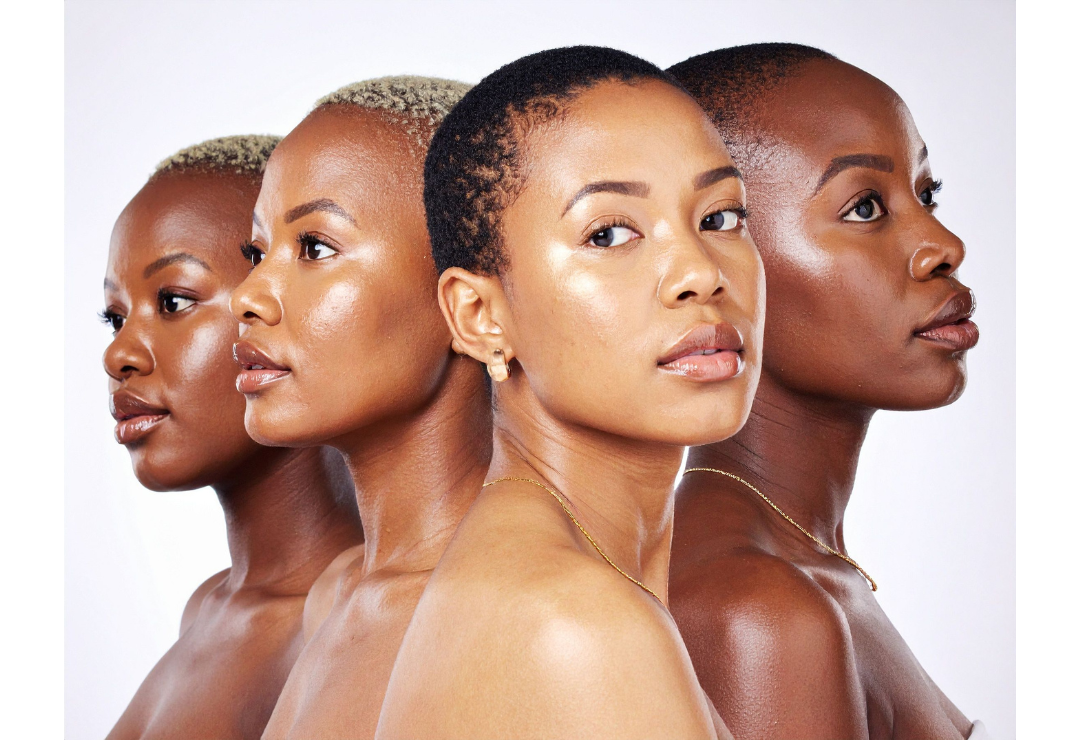
Colorism Is A Sign Of Cultural Degeneracy.
Black Women and Desirability
I live in a city where colorism runs rampant.
Colorist relationships always follow the same pattern, as if they were created on factory setting. It’s always a dark-skinned man or a dark masculine lesbian with a light-skinned or white feminine woman.
Every time I see such pairings, my eyes roll internally.
Now, I wish I didn’t have that reaction. I wish I could see these relationships as part the diverse spectrum of rainbow-gumdrop liberal fantasies that the media wants you to believe they are.
But alas, I do.
Because I think I know what it means. And most of the time, I’m right.
Because the truth is, you don’t see the opposite nearly as much.
It’s far less common see dark-skinned feminine black women in relationships with fair-skinned men or masculine lesbians. It is also rare to see a very dark woman paired with someone of her own complexion.
And maybe, if it were more balanced, I would feel differently.
But it is not, and there is a reason for that.
There is history behind that.
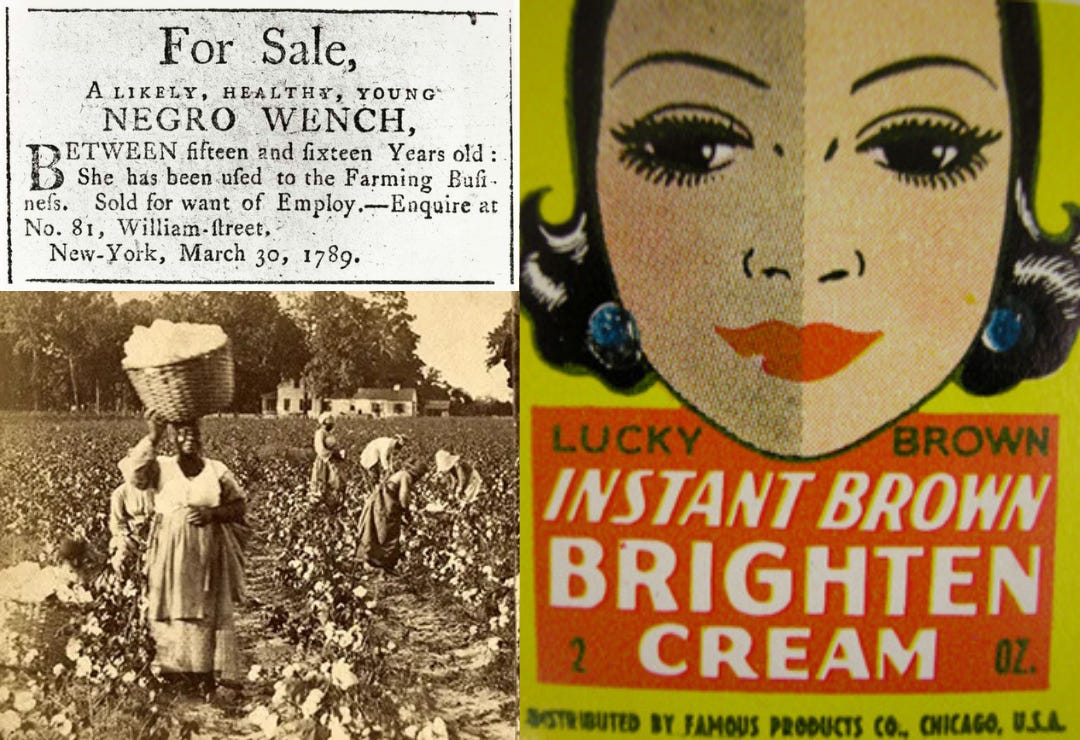
Now, now, now…
I know many dark knights out there will want to defend the keeping of their light-skinned princess. But before you twist your panties in a bunch, I just want to note that my very existence is the product of such a colorist pairing, and I have written in-depth about how I’ve been on both sides of this “pretty light skinned girl” equation.
So ride with me for a minute.
…
The most insidious thing about colorism is the fact that colorist people never admit to their own colorism.
Many like to think that they chose their mate based on a preference, as if the desirability of women who share your complexion is the similar to selecting your favorite pizza topping.
Some claim to have no preference, and only to spout off a bunch of reasons as to why they have found women of a particular hue to be incompatible partners.
They are either not self aware, or they are lying to themselves. This then offers them the freedom and flexibility to lie to you.
I remember directly asking my father if he had a “preference” for light skin, after witnessing him exclusively marry, date, and have affairs with multiple women who were far lighter skinned than him; my Mother being amongst the fairest of them all. He shrugged and claimed that he did not.
And I rolled my eyes. Internally.
.
Ironically, super dark-skinned women tend to be most desired amongst white men.
In fact, whenever I see a black woman with that deep dark complexion like Lupita Nyongo, Jodie Turner Smith, or Alek Wek, she is usually going to be partnered with a white man, unless she has chosen to be with a someone directly from her ancestral lands, where women who look like her are the norm.
There is absolutely a thriving marriage market for the unambiguously African woman……in Europe.
For a lot of white men, the blacker the berry, the sweeter the juice.
We may call it exoticism.
We may call it what we like. But most black people don’t fully appreciate women who provide such stark reminders of where they come from.
The reason why dark-skinned women are disproportionately partnered with white men is largely because that’s who is offering them the most affection. That’s who is viewing them through a totally different lens, whether it’s due to fetishism, or simply seeing their beauty with fresh eyes.
On the flip side, fetishism is common amongst the light and white women who are in relationships with dark-skinned people, usually in the form of hyper-masculinization. Colorist relationships are often mutually parasitic in this way.
After all, you can only give what you have.
We don’t live in a world where we’ve collectively healed our intergenerational trauma. So yes, we can have preferences and tastes in what we find desirable. But that doesn’t always mean that those preferences come from a healthy and authentic place.
And if your selection process for those whom you bring closest to you is so heavily influenced by societal brainwashing, you have to ask yourself what else you have allowed others to dictate about the most important aspects of your life.
You must also contend with the complexes you’ve internalized, which categorize entire races of human beings as ugly or undesirable based on their natural features. Especially if you yourself, have those features.
This is exactly how colorism is a sign of cultural degeneracy; how it is a sign of stunted growth and backward thought.
If I’m in an area where dark-skinned, natural-haired black women are not as desired as their lighter skinned counterparts, particularly by other black people, it also signals that the culture at large is not very socially innovative or expansive in thought.
People in these cultures tend to be stuck in whatever modes they have inherited, even if it is regressive. People will hold onto antiquated versions of wealth and status, even if it’s dysfunctional and corny.
Mind you, this can include major cities like Los Angeles, Miami, Atlanta, Boston…places that may thrive in certain sectors, but the underlying ideas proliferating throughout the culture are not necessarily new or cutting edge.
Personally, I have found New York to be a cosmopolitan city where Black women of all hues get a lot of love…from people of all hues, including other black people. In fact, New York is the one place on Earth where I have felt most seen, and where I was able to heal from living in environments where colorism was the norm.
It is not to say that there are not colorist people in New York…there are.
But there is so much diversity and innovation in thought, including black culture, that colorism has been comparatively disempowered as a thought form.
There is still much work to be done to shift culture. At this point, I believe that it really begins with us learning to love ourselves and speak our truths.
This is why I'm so happy when I see black women embracing our natural hair texture, and choosing to celebrate our unique beauty. We accentuate our differences, instead of hiding them and pretending that they are something they are not.
It’s particularly difficult to do this in a culture that does not celebrate you. But ultimately, people cannot love what you do not give them a chance to see.
We may not be the ones who set the standard, and desirability cannot erase legacies of oppression.
But we can carve out spaces to remind ourselves of our worth, publicly question the status quo, and plant seedlings which pave the way for lasting social change.
Slowly but surely, those who are ready to get with the times will follow suit.


Great piece. Same here - fair mum, dark skinned dad. It’s so tangly. On the one hand, darker skinned people are seen as inferior, more disposable, “other”, less power. So on the face of it, a woman who has less power in a heterosexual relationship could presume to have slightly more power paired with a darker skinned man, a bit more influence maybe. I’ve seen that work great where it’s a white woman wjth a non-European dark skinned man (eg Aussie lady married to Nepali guy); the guys seem to actually treat those women better.
But it doesn’t work in the same culture - my parents are both Indian, mum as white as a banshee, dark dad; he still runs the show. Gender has more salience than colour *within* cultures and I suppose sometimes even *between* cultures if Kerala Goodkin’s story is anything to go by.
And on the other hand, having been with a white guy myself as a dark skinned lady, there’s all these other stereotypes - “he couldn’t do any better so he bought an exotic Asian lady” and “she is a gold digger, she did well scoring a white guy!”
I agree skin colour preferences are not an accident and it’s good of you to point that out. Really important to be conscious of that